
What to do with a ton of garlic scapes?
By Jerri
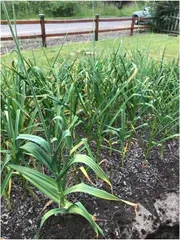
What to do? FERMENT THEM of course! Garlic scapes are the curly part of the garlic stalk that shoots up before garlic is ready to be harvested. You remove the scapes so that the energy for growth goes toward the bulb in its final stage, and not the upper part of the plant. They can be used just like garlic, so why not try fermenting them?
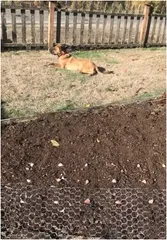
I planted these last fall, with my Sarge watching for squirrels:
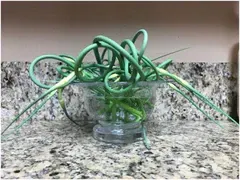
So these were sitting on my counter in some water, but I just wasn’t ready to put them in a recipe. I could have refrigerated them for a few weeks, but hey, let’s see what happens when we Get Fermented with them!
So pretty!
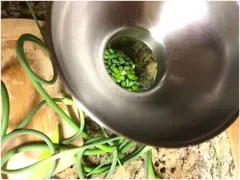
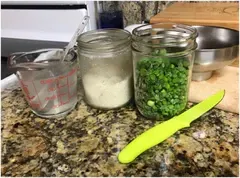
The most tedious part is cutting them up into teeny tiny pieces.
I want to use them as a garnish, or to stir fry, so I am hoping the fermentation process softens them up a bit. Next is to prepare the salt brine. I’m only doing a pint jar of scapes, so likely will only need 1 cup or less of brine. The ratio is 1 to 3 Tablespoons sea salt per 1 quart of water. I settled on about 1/2 Tablespoon of salt.
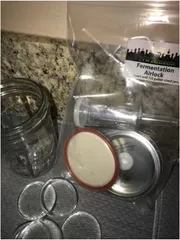
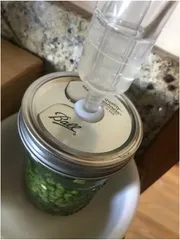
You’ll need an airlock, which you can make yourself, or better yet, buy one from NWFerments and save yourself the hassle!
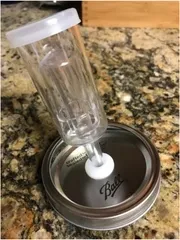
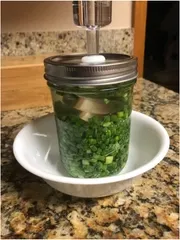
Here’s what the airlock looks like put together:
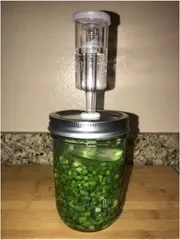
So pour your brine in the jar, and carefully put weights on top. I had a heckuva time with floating pieces, but most of my scapes were covered.
I filled the airlock itself about half way full with water to ensure it creates a seal that will only allow gasses to escape, but no oxygen to enter in. And, I put a bowl underneath in case it goes crazy and leaks…it’s happened!
Now I wait, aiming for 7 days at least. My kitchen is about 66º, perhaps slightly warmer now that spring is here and summer is just weeks away. I don’t want to ferment veggies any more than 70º, or I risk mushy and unappealing results – possibly even mold that the brew can’t come back from.
Glad I put that bowl underneath! Guess it was a little full!
The result?
They were wonderfully “pickled” in nature! They tasted so good, the texture being only slightly softer. I have now stir fried them with onions and then added them to scrambled eggs, as well as adding them sautéed to other meals. My mom, a vegan, loved them right on her salad.
If a farmer ever offers you garlic scapes, take him or her up on it, and GET FERMENTED!
How are mesophilic and thermophilic yogurts different from each other?
How are mesophilic and thermophilic yogurts different from each other? The primary difference between mesophilic and thermophilic yogurts is the temperature...
Bake Real Sourdough At Home With The Yukon Sourdough Recipe
Bake Real Sourdough at Home with the Yukon Sourdough Starter Kit There is something deeply satisfying about baking sourdough at...

Sourdough Bagel Recipe
Sourdough Bagel Recipe Ingredients 1¼ cups warm water (254 grams) 1½ tablespoons honey (40 grams) ⅔ cup sourdough starter, active...

Sourdough Pizza Crust
Sourdough Pizza Crust Ingredients ¼-⅓ cup sourdough starter, active and bubbly (50 grams, fed at 100% hydration) ¾ cup water (175 grams)...
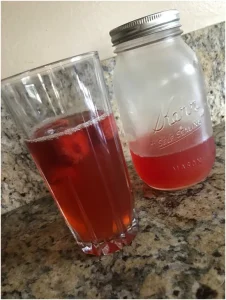
Kombucha Brewing Tips for Summertime
Kombucha Brewing Tips for Summertime In warmer weather, kombucha fermentation speeds up. If your kombucha is brewing too quickly and/or...
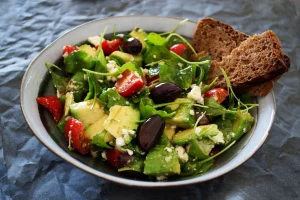
Kombucha Salad Dressing
Kombucha Salad Dressing Not just a salad dressing- great for marinades and added to dips too! Ingredients: 1 cup...
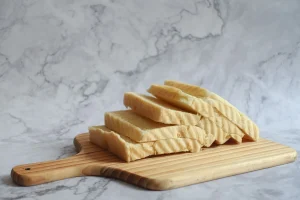
Sourdough Sandwich Bread Loaf
Sourdough Sandwich Bread Loaf Ingredients 4⅓ cups all-purpose flour, spooned and leveled (510 grams) 4 tablespoons salted butter, softened (56...

Kombucha Marinade
Kombucha Marinade Try it with meats, veggies, tempeh, tofu & more. A great way to use extra strong Kombucha! Ingredients...

Apple Cinnamon Water Kefir
Apple Cinnamon Water Kefir Ingredients 4 cups finished water kefir (grains removed) 1 cup unfiltered apple cider (or to taste)...
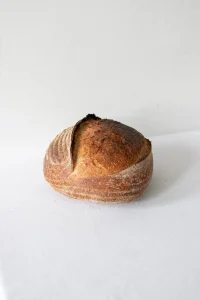
Bread Machine (From King Arthur Flour)
Sourdough Rye Bread – For Bread Machine (From King Arthur Flour) Ingredients 2 tablespoons vegetable oil 1 1/2 tablespoons molasses...