
WAKE UP! Activating Dried and Sleepy Milk Kefir Grains
by Jerri
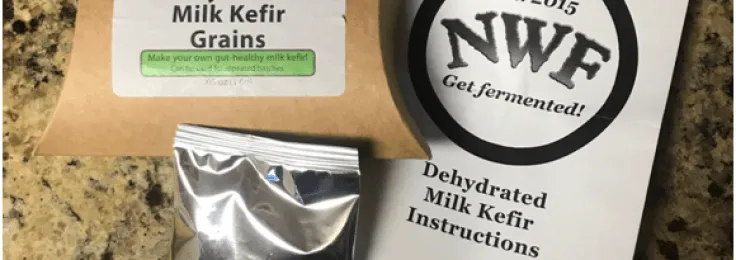
Dried Milk Kefir Grains are awesome to work with, or to have on hand as a back up for current grains. NWFerments can help you get started if you’ve always wanted to start on that probiotically awesome journey!
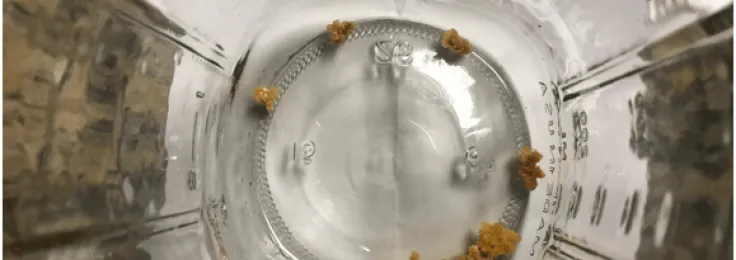
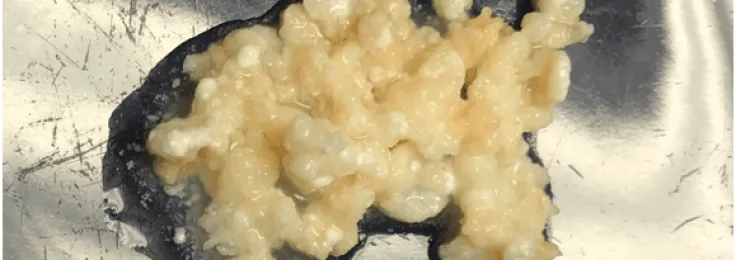
You’ll notice the dried grains will have some larger pieces along with some smaller pieces, and that they are brownish in color€.oh, and they smell a bit pungent! All normal so make sure you have a good quality, regularly pasteurized milk to get started.
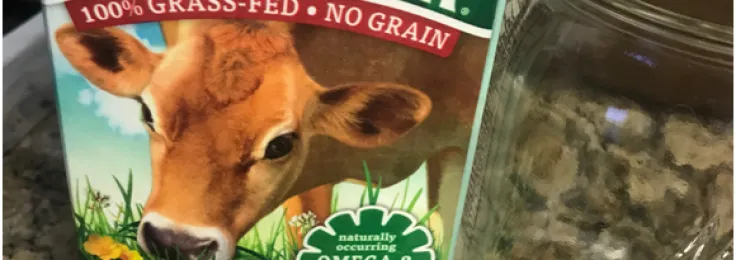
I lucked out with some organic milk that was marked down, but still had plenty of days before its best by date.
You’ll need a quart jar, and just 1 cup of milk to get started. Put the grains in the jar, and then the milk.
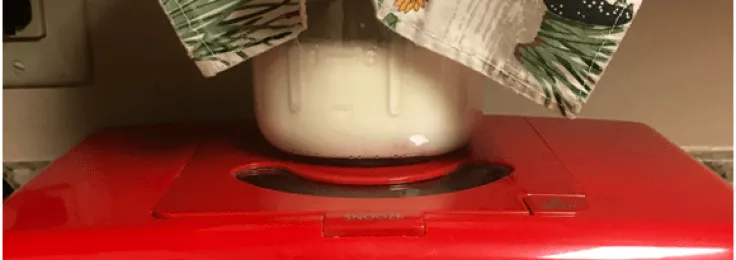
I like the older jars that have the cup measurement markings on the side. It’s easy peasy to see the one-cup line. Then, simply cover it with a breathable cover, and let it sit at room temperature, 68-78ºF for 12 hours. My milk kefir is ready to groove!
After 12 hours, check it to see if it has thickened the milk. Don’t worry if it hasn’t. Go another 12 hours, and regardless of what happens, at the 24 th hour you are going to strain the grains out and give them another one-cup amount of brand new milk. Do not use a metal strainer unless you are certain it’s 100% stainless steel . You’ll continue this process until the milk thickens within 24 hours€thus activated!
If it did thicken in your first 12 hours (LUCKY!) then strain it out and give it another 1 to 1 ½ cups of milk to let it culture 12-24 hours. You’ll want to increase the amount of milk used as your grains increase in size and quantity. Just like when a little human being grows, that human needs more food!
Try not to disturb your little lovies as they take time to wake up. Keep them out of direct sunlight, as well as any drafts.
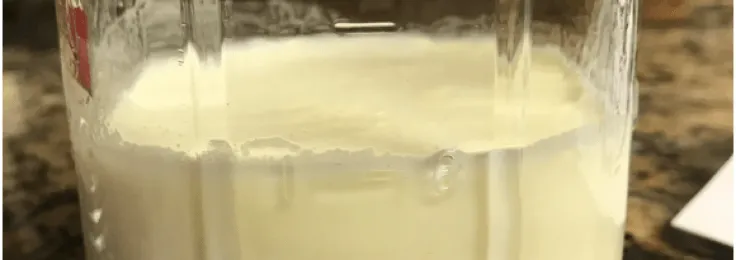
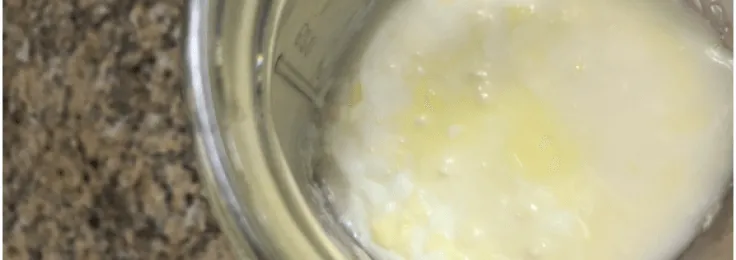
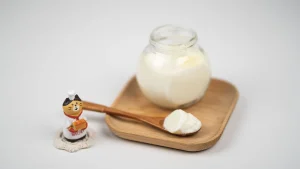
Here’s my milk kefir you can see the yellow spots, which are the cream parts of the non-homogenized milk I used. YUM!
If you find that your milk kefir thickens the milk, but has no tang to it, don’t worry. It may just need a few more rounds of fresh milk to pick up speed. It can also be helpful to forget about it, I mean, go a tad bit longer than 24 hours ;). In general to get tang, you can either increase the warmth of the room a bit, let it go a few hours longer than usual, or combine both these tips. You don’t want to see your milk kefir separate into curds and whey, which indicates they are low on food and possibly starving, so watch carefully when you attempt this.
Now you’ll want to get those grains out in order to feed them again, thus starting the process again.
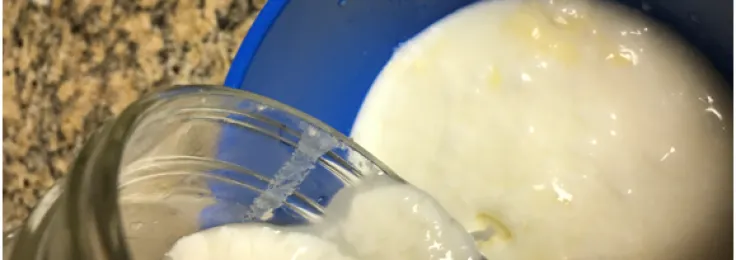
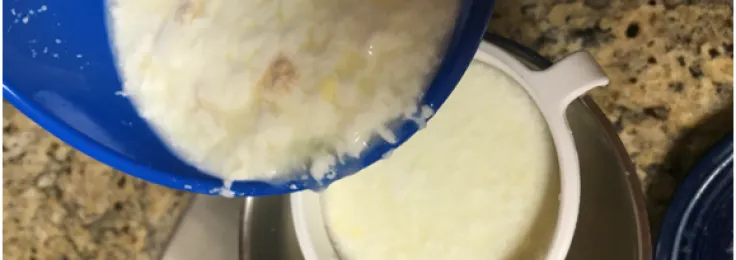
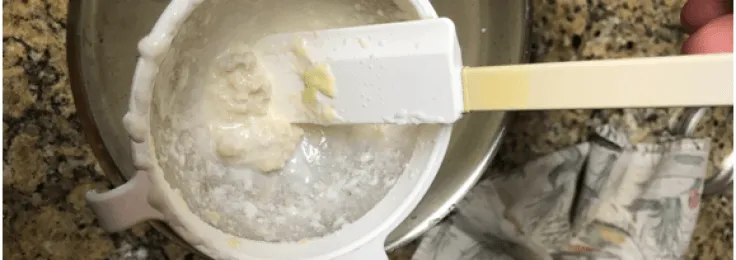
After I’ve poured my kefir into a bowl, I strain out the grains using a non-metal strainer and a rubber spatula/scraper. You could skip the bowl step and just do it from the jar of course.
Hello lovies! Mama’s gonna take good care of you.
Remember that these are living organisms, and they MUST be fed and cared for daily. If you neglect them, they may produce ucky milk kefir, and possibly die.
Play with the ratio of grains to milk, if you find your milk is culturing too fast, then you may have too many grains for the amount of milk you have. The temperature might also be too warm if your grain ratio seems fine. If your grains grow a lot, consider giving them away! Or, you can throw the excess into smoothies for an extra probiotic kick.
Again, remember that longer culturing time and higher temps will make your milk kefir more sour/tangy, while shorter or cooler temps will result in something more mild. You want to stick to that 68-78ºF range for optimal results and healthy grains.
Pay attention to your grains now that they are awake! Milk Kefir Grains are an optimal way to Get Fermented!
How are mesophilic and thermophilic yogurts different from each other?
How are mesophilic and thermophilic yogurts different from each other? The primary difference between mesophilic and thermophilic yogurts is the temperature...
Bake Real Sourdough At Home With The Yukon Sourdough Recipe
Bake Real Sourdough at Home with the Yukon Sourdough Starter Kit There is something deeply satisfying about baking sourdough at...

Sourdough Bagel Recipe
Sourdough Bagel Recipe Ingredients 1¼ cups warm water (254 grams) 1½ tablespoons honey (40 grams) ⅔ cup sourdough starter, active...

Sourdough Pizza Crust
Sourdough Pizza Crust Ingredients ¼-⅓ cup sourdough starter, active and bubbly (50 grams, fed at 100% hydration) ¾ cup water (175 grams)...
Kombucha Brewing Tips for Summertime
Kombucha Brewing Tips for Summertime In warmer weather, kombucha fermentation speeds up. If your kombucha is brewing too quickly and/or...
Kombucha Salad Dressing
Kombucha Salad Dressing Not just a salad dressing- great for marinades and added to dips too! Ingredients: 1 cup...
Sourdough Sandwich Bread Loaf
Sourdough Sandwich Bread Loaf Ingredients 4⅓ cups all-purpose flour, spooned and leveled (510 grams) 4 tablespoons salted butter, softened (56...

Kombucha Marinade
Kombucha Marinade Try it with meats, veggies, tempeh, tofu & more. A great way to use extra strong Kombucha! Ingredients...

Apple Cinnamon Water Kefir
Apple Cinnamon Water Kefir Ingredients 4 cups finished water kefir (grains removed) 1 cup unfiltered apple cider (or to taste)...
Bread Machine (From King Arthur Flour)
Sourdough Rye Bread – For Bread Machine (From King Arthur Flour) Ingredients 2 tablespoons vegetable oil 1 1/2 tablespoons molasses...