Even in an airlock container, a vegetable ferment can turn wonky. More perplexing is having the same ferment in different jars, side by side, with one unstable and the other fine. You may spot white stuff and ask yourself – what IS that layer on top? But before you chuck the whole thing out – check for Kahm yeast.
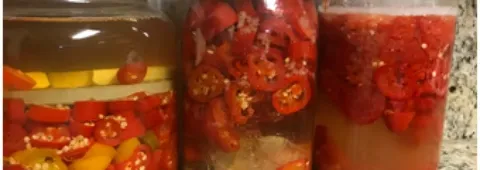
The jar in the middle has the culprit on top. All three jars have the same hot peppers and brine concentration. Their fermentation spot is the same granite countertop.
What Is Kahm Yeast?
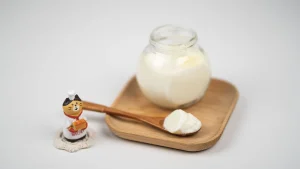
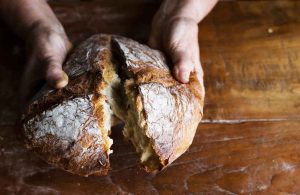
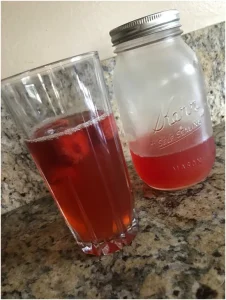
Kahm yeast is the term that covers a collection of a variety of harmless yeasts that consume sugar from your ferment. Kahm yeast can grow on all fermented foods, including sauerkraut, pickles, kombucha, kimchi, and sourdough starters.
What does Kahm yeast look like?
Sandor Katz, Fermentation Revivalist and author of “The Art of Fermentation,” describes Kahm yeast as a harmless creamy-white-to-beige wavy growth that forms on the surface of fermented vegetables or beverages where oxygen meets the liquid. This film stays at the top, is not fuzzy, and doesn’t grow below the surface. You shouldn’t see it further down among your food.
Is Kahm Yeast Safe to Eat?
While Kahm yeast isn’t particularly good for you, it’s not bad, either. Some people will mix the Kahm yeast in their ferment if they catch it early enough. However, you’ll probably want to scoop it to remove the yeast so it doesn’t alter the taste of your ferment. Katz says if you were to eat it, nothing would happen, unlike its more evil counterpart, mold.
Kahm Yeast Vs. Mold
The presence of mold is not good. Throw away your fermenting vegetables or beverage if you detect mold. Mold is a fungal growth that comes in many colors, like white, green, black, or blue. The key identifier is it is fuzzy or hairy – unlike Kahm’s smooth or powdery texture. If Kahm yeast gets too thick – looking like a SCOBY – mold can grow on top of it.
If you’re unsure if it’s mold or Kahm yeast, and your ferment doesn’t look, smell, or taste right – it’s better to be safe and throw it out. As they say, “when in doubt, throw it out!”
How To Get Rid Of Kahm Yeast
- Try to remove as much Kahm yeast as possible, but don’t worry, eating it won’t hurt you.
- Sprinkle some salt on top of the surface.
- Add more brine with a larger salt concentration.
- Remove and clean weights well: soak in vinegar, rinse in hot water, and allow to cool before putting back in the jar.
- Move to a cooler spot, well below 70º F.
- If yeast forms even though you use an airlock system, this is normal, but it may be that your lid is still allowing oxygen to get in. If you do more ferment batches later that continue yielding yeast no matter what you try, it’s probably time for a new lid/seal.
- If you don’t have much yeast forming, stir it back in.
- If you continue to ferment the same jar, it will likely return, so you should take steps to prevent Kahm yeast from recurring.
Preventing Kahm Yeast
- Ferment in cooler room temps, 70º F and below – if you think about the olden days, fermenting was traditionally done in unfinished basements, root cellars, or buried underground. All of these places can be near 55º F or so! Even if the yeast doesn’t form, you will likely get mushy or moldy veggies, or they will taste off (or just plain gross) at 70º F or above.
- Clean all tools and vessels well. Use boiling water/white vinegar to get them clean sans chemicals. Rinse with hot water. Finally, cool everything before use in your ferment.
- Use a higher concentration of salt in the brine, but not over the 3 Tbsp salt per 1-quart water ratio (too much salt stops fermentation).
- Chop food into smaller pieces for more surface area and thus the availability of natural sugars; this gets the acidity level lower faster so yeast can’t form!
- Use more salt if you have larger pieces of food or expect to ferment for a longer time. Yes, it will be salty.
- Be sure to submerge everything under the brine! Then, if Kahm yeast does form, it will form on the surface (but work its way down), and you can skim it off much easier.
- Keep out as much oxygen as possible and fill the container to at least 80% so you have around one inch of headspace. If you had Kahm yeast in the past, try to open the container only occasionally unless you need to burp it to prevent an explosion.
- Use airlocks. They increase your chances of less Kahm yeast (and mold).
Kahm yeast can be a frustrating addition to your ferment, but it is harmless and dealt with easily. Knowing how to prevent and recognize Kahm yeast can save you a lot of worry and effort. You’ll enjoy delicious and healthy ferments with proper cleaning and fermentation techniques without worrying about Kahm yeast. If you are passionate about fermentation or looking to get started, take the necessary steps to prevent Kahm yeast and enjoy making your own fermented foods. Happy fermenting!